
Trigger Theory: Why the Gen6 Glock Trigger Feels Different
One thing I’ve found interesting is how consistent the feedback has been.
Most shooters agree the Gen6 trigger shoe feels better under the finger than previous Glock generations. The flatter face naturally encourages your finger to sit lower on the trigger, giving you slightly more leverage throughout the press.
On paper, that sounds like an advantage.
Mechanically, it’s a little more complicated.
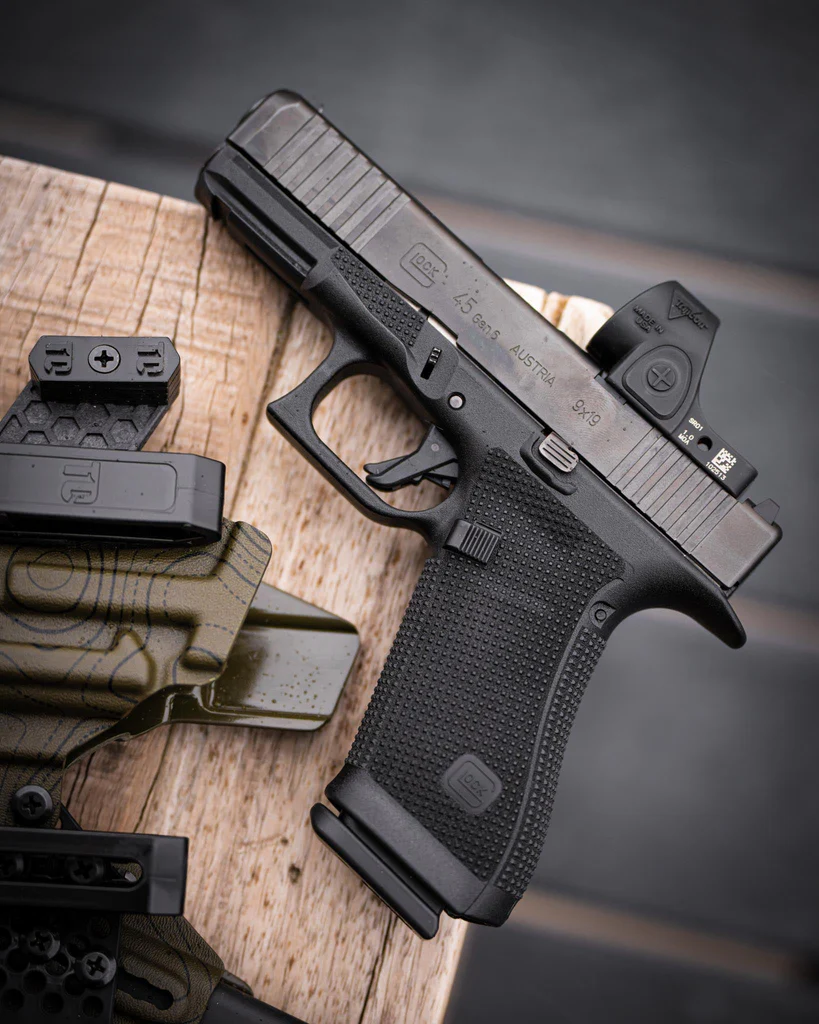
More Leverage Changes What You Feel
Placing your finger lower on the trigger increases mechanical leverage.
That can make the trigger feel lighter because you’re applying force farther from the pivot point.
The tradeoff is that leverage also magnifies movement. If there’s additional travel before the break, increased leverage can make it easier for your finger to detect. What may have felt subtle with the previous trigger shoe can become more noticeable with the flatter Gen6 design.
In other words, the same mechanical movement becomes easier for the shooter to feel.
Material and Fit Matter
The factory Gen6 trigger shoe is still polymer. Polymer is lightweight, durable, and inexpensive to manufacture, but it also flexes under load in ways aluminum does not.
I’ve also observed greater clearance between the trigger pin and the factory polymer trigger shoe than you’ll typically find in a precision-machined aluminum shoe. That additional movement isn’t unsafe, but it can contribute to the less-defined feeling some shooters describe during the trigger press.
None of these characteristics, by themselves, define the trigger.
They simply become part of what your finger experiences.
The Mechanical Difference I Keep Seeing
Perhaps the most interesting observation isn’t the trigger shoe at all.
Although the Gen6 trigger system shares much of its architecture with the Gen5—including the trigger bar, connector, trigger return spring, striker spring, and overall operating system—I’m consistently observing increased cruciform engagement during inspection.
The parts list is nearly identical.
The geometry is not.
That increased engagement changes the mechanical relationship between the trigger bar and the striker lug before release. Combined with the increased leverage of the flatter trigger shoe and the additional movement inherent in the factory polymer shoe, it helps explain why many shooters describe the Gen6 trigger as having a little more creep or a slightly vaguer break than previous generations.
That doesn’t automatically make the trigger better or worse.
It simply means the Gen6 has its own mechanical characteristics, and understanding those characteristics is the first step toward tuning the system effectively.
Engineering the Difference
Understanding those differences is part of the tuning process.
When I build a Heisenberg system for a Gen6 Glock, I don’t simply install the same components I use in previous generations and expect identical results. The tune is developed around the mechanical characteristics of the Gen6 platform, including the increased cruciform engagement and the way the trigger system presents itself to the shooter.
Every Glock generation has its own personality.
The job isn’t to force every generation to feel the same.
The job is to understand the platform well enough to bring out its best characteristics while maintaining the standards TacticalPontoon is known for.
That’s the difference between installing parts…
and tuning a system.